Heraldry
Heraldry is the ancient practice of designing, displaying, and recording coats of arms and heraldic badges. It serves as a visual language that conveys identity, lineage and social status. Heraldry is a codified system and includes shields, crests, mantling, supporters, and mottos.
Clan Comyn are identified by:
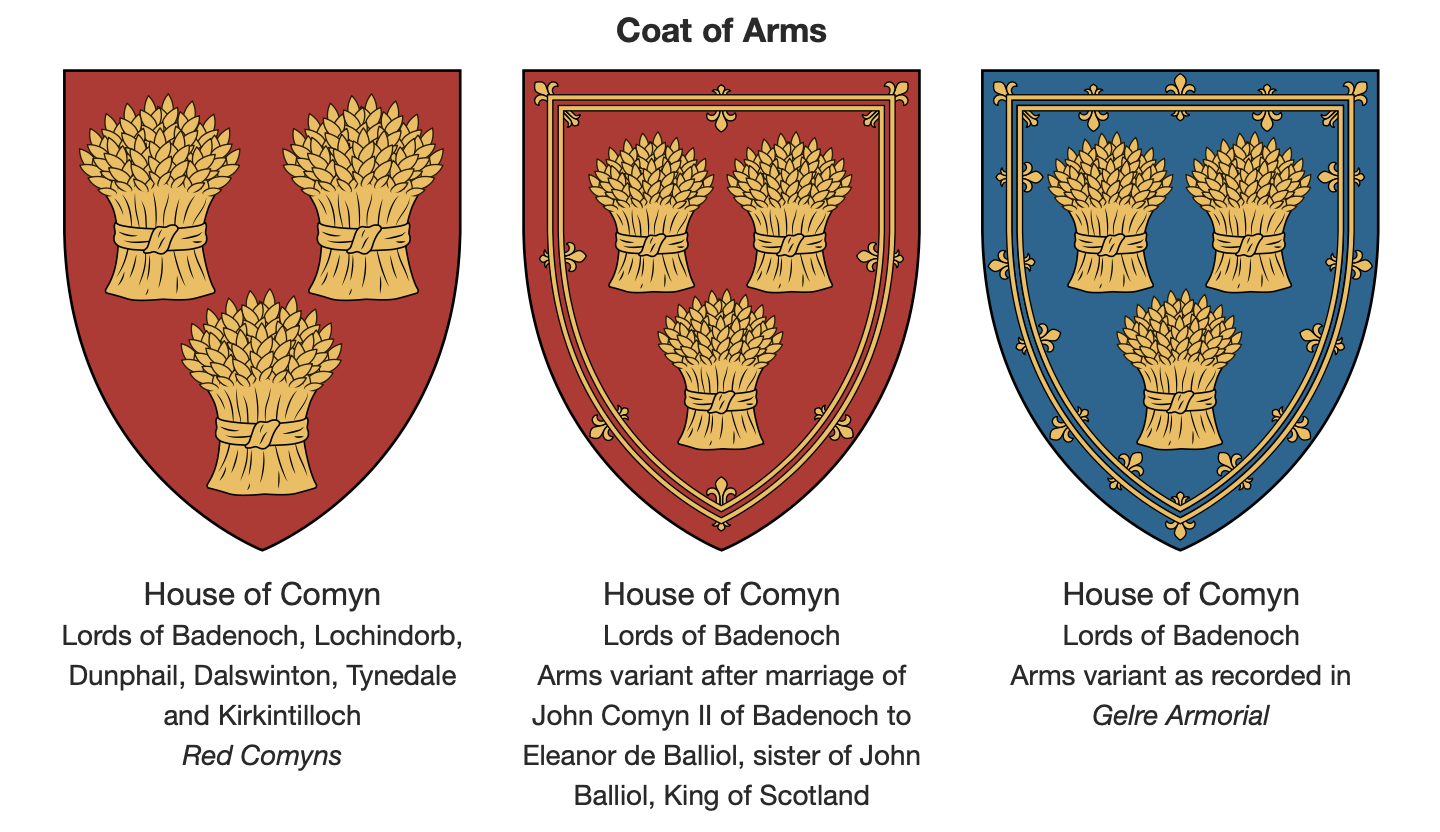
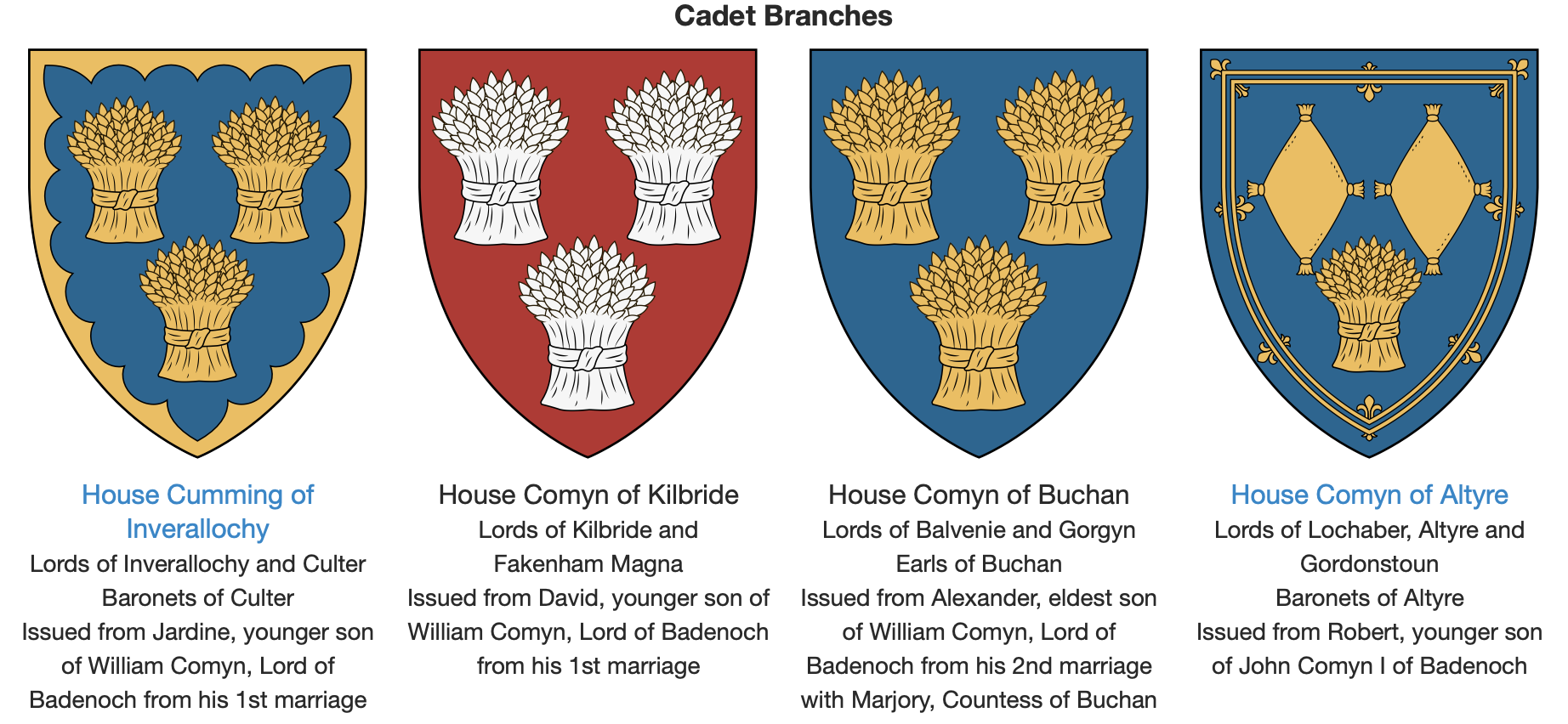
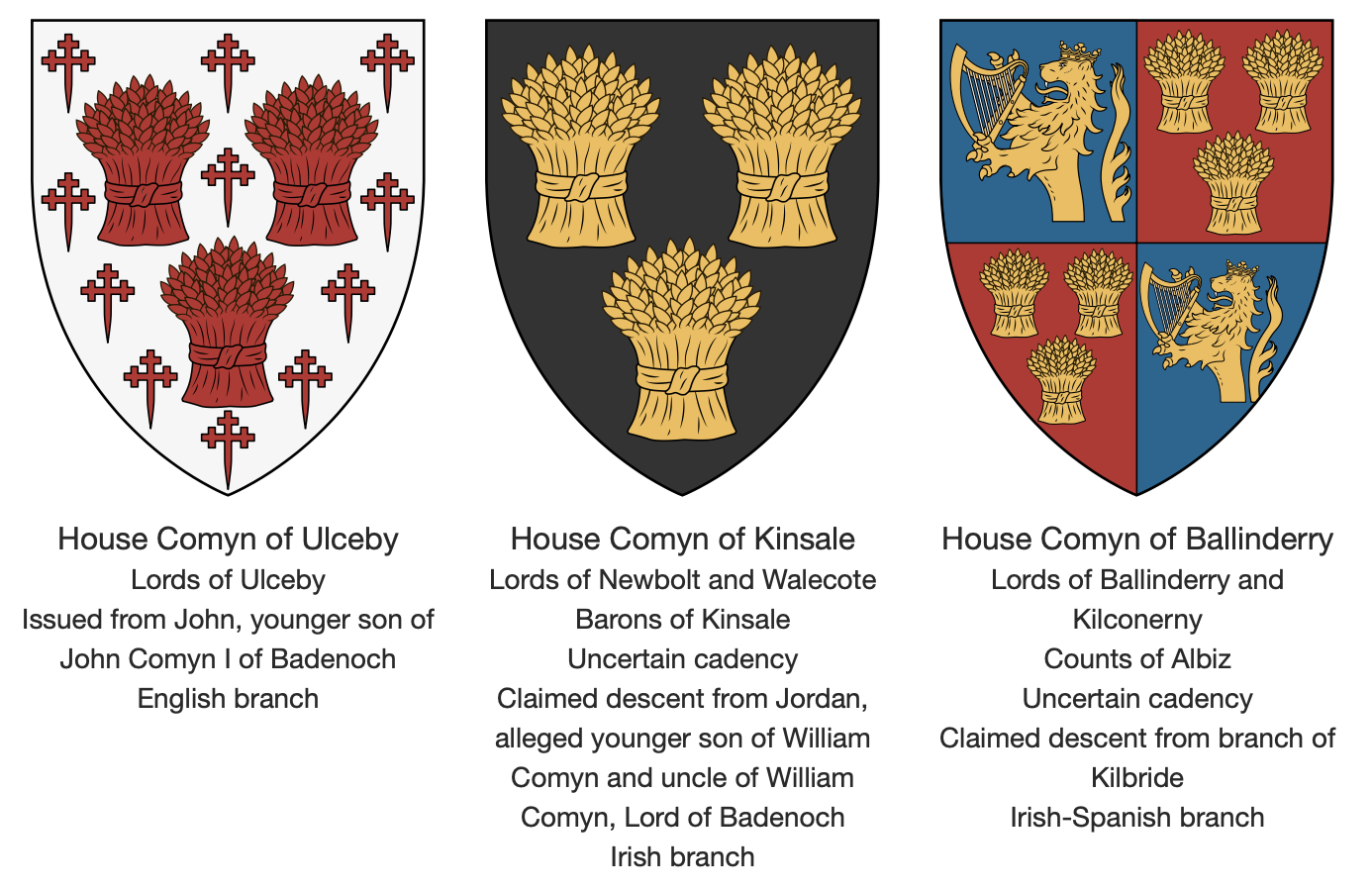
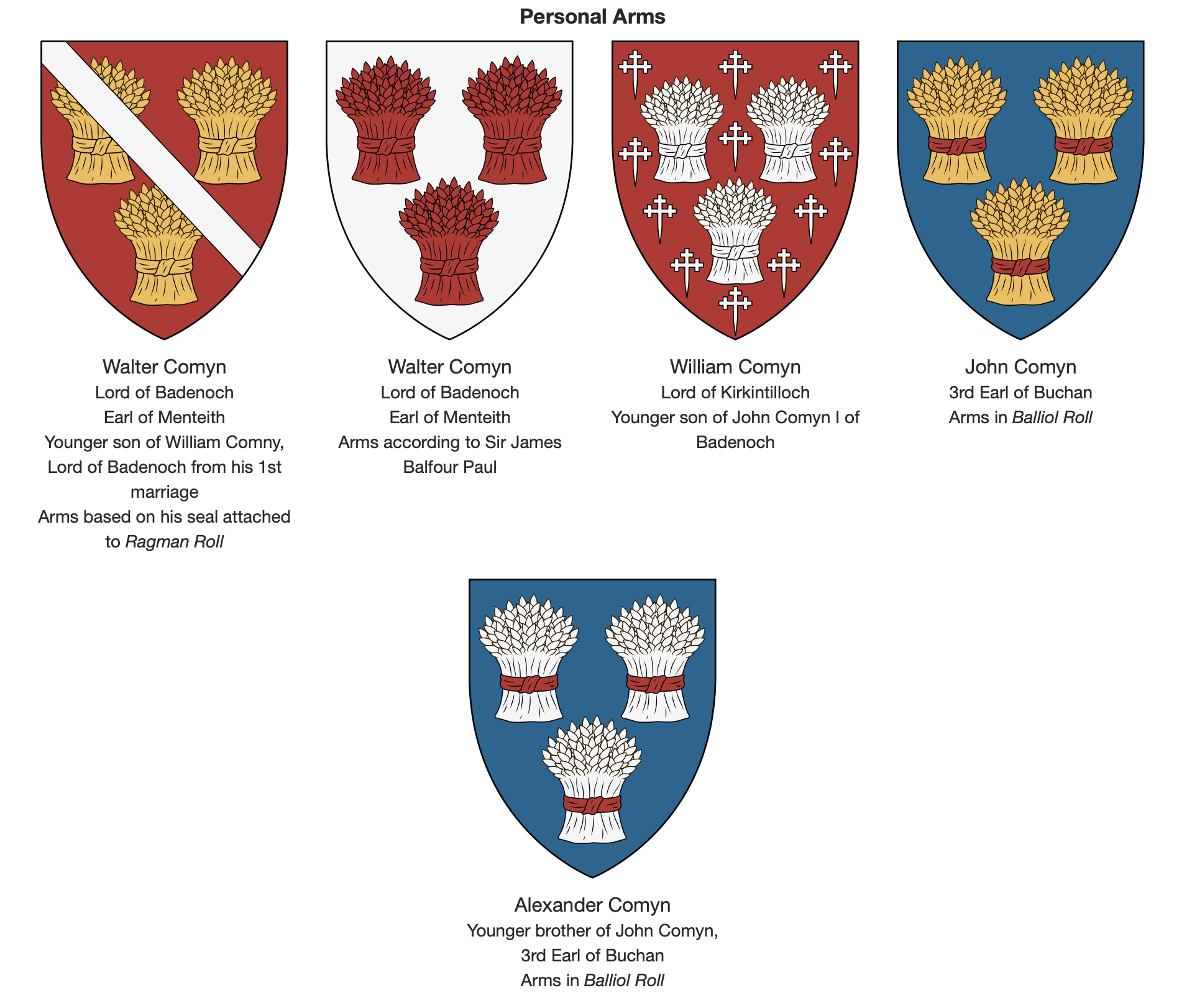
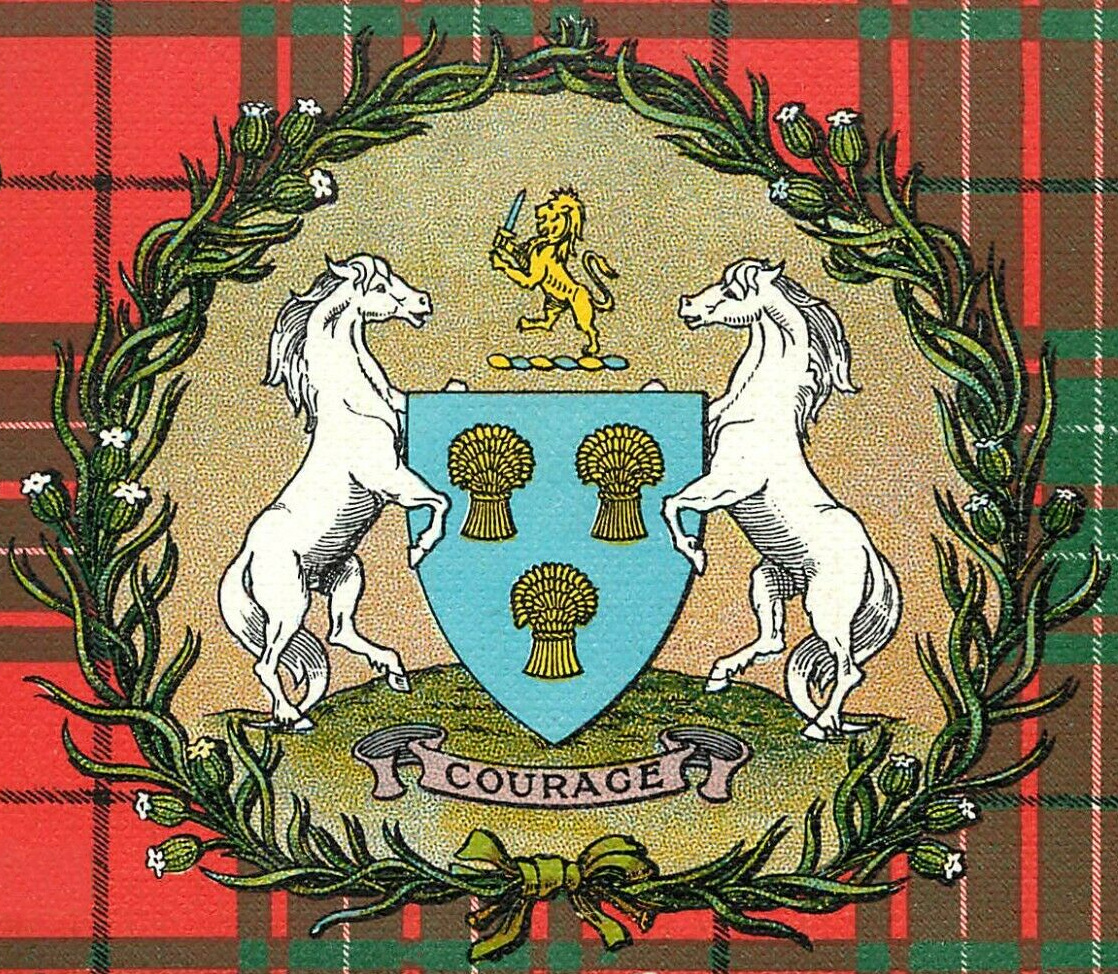
- Azure and Or (Ultramarine/French-Blue and Gold).
- Wheat/Oat Sheaves ("garbs").
- A Rampant Lion holding a Dagger or Sword. The blade is often in reference to the war of independence, courage and resilience.
- Horses: Argent (silver or white), with Manes and Tail Or or Argent (gold or silver/white).
- Fleurs-de-lis.
- The Motto: Courage.
- The Pussy Willow (Salix cinerea), aka Common Sallow.
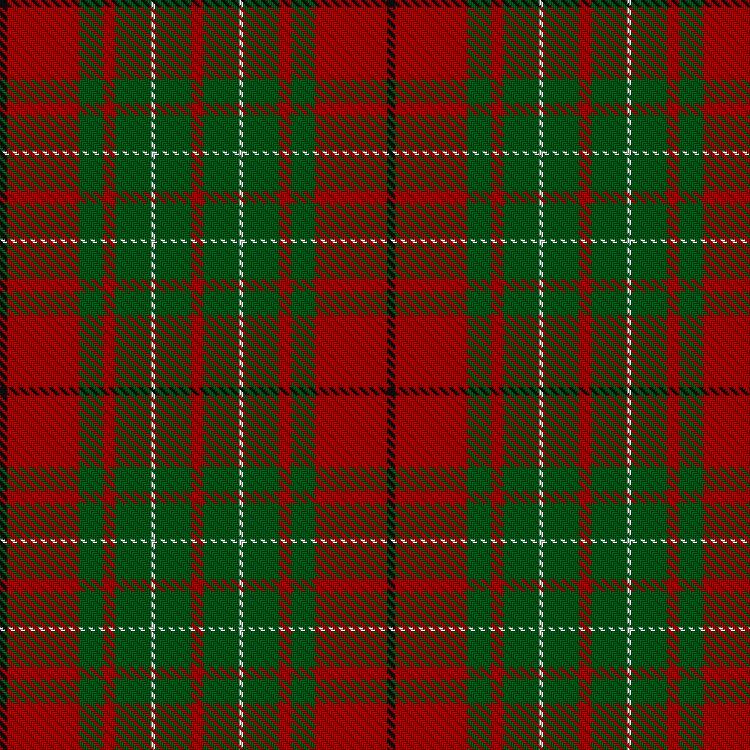
- The Red and Green Tartan currently known as the 'Cumming Red Tartan' or 'Cumming Red Modern Tartan'; historically known as the 'The Cumyn Tartan'. The difference with the "Modern" variant is a brighter red.
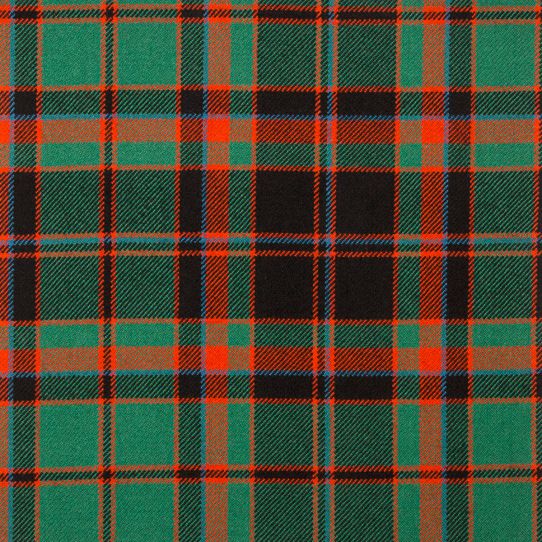
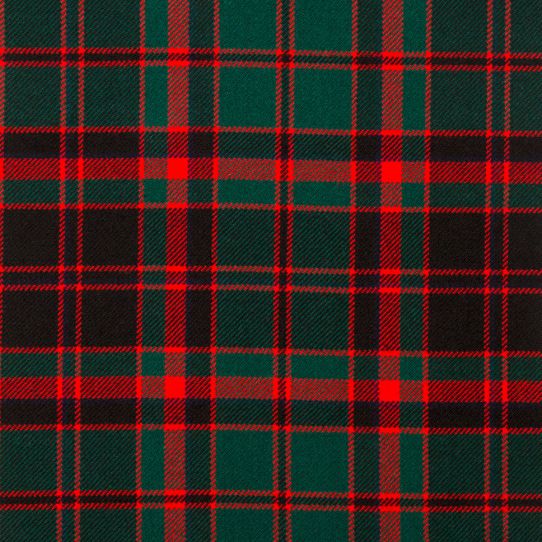
- The Cumming Hunting Tartan.
- The War Cry: "as long as there is a stick in the woods, there won't be deceit from Clan Cumming" (Fhad 's a bhios maide sa choill, cha bhi foill an Cuimeineach).
Shields
Crests
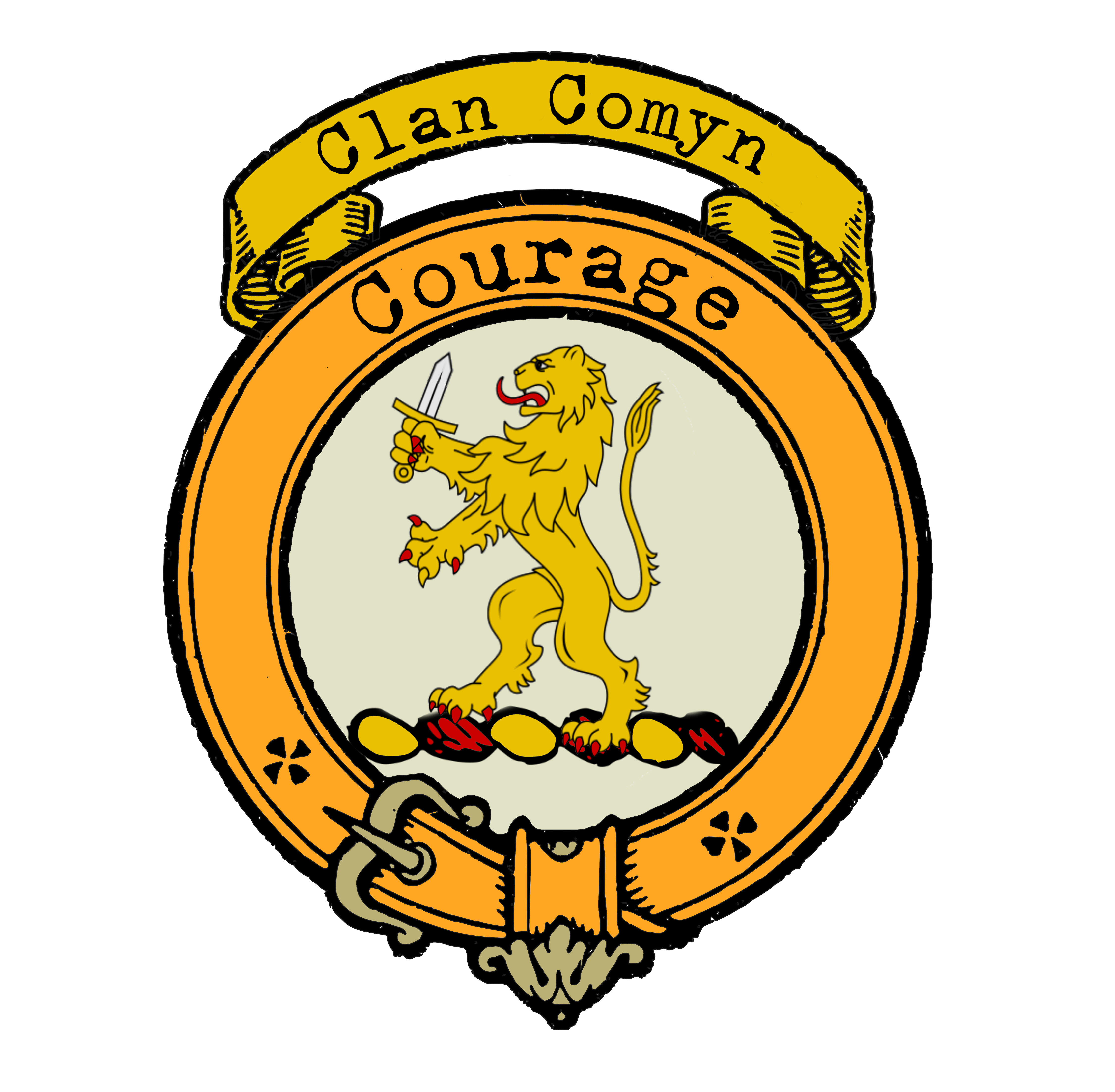
This crest of a red and yellow torse (twisted roll of fabric) indicates the crest is generally used with the Comyn Red shield. A torse tends to match a shield's colours.
Torse

Supporters
Tartan
This is the accepted tartan as certified by W and A Smith in their 1850 'Authenticated Tartans of the Clans and Families of Scotland'. Its authentication is recorded as saying; 'Sir W.G. Gordon Cumming is now the head of this family, and from him we received the pattern here given as 'The Cumyn Tartan'.’
The original Scottish Tartans Authority (STA) and the Scottish Tartans World Register (STWR) reference numbers were 1157. It can be found on the Scottish Registry of Tartans.
Nb. The idea of clan-specific tartans was of King George IV’s state visit to Edinburgh in August 1822. It was the first visit by a reigning British monarch to Scotland in nearly 200 years, and Sir Walter Scott orchestrated the pageant. He insisted that the king and all the attending Highland chiefs and gentlemen wear full Highland dress and “their” clan tartans. The king himself appeared in a Royal Stewart tartan kilt, and created an overnight craze.
Before 1822, tartan was traditionally a regional Highland fabric where local weavers made whatever patterns they could with the dyes available in their area, and clansmen wore the tartans of their local weaver. There were no official “clan tartans.” of identity.
Hunting Tartans
- The Ancient Hunting Tartan
- Modern Hunting Tartan
Cuming Clan Australia
This Australian Branch is further identified by:
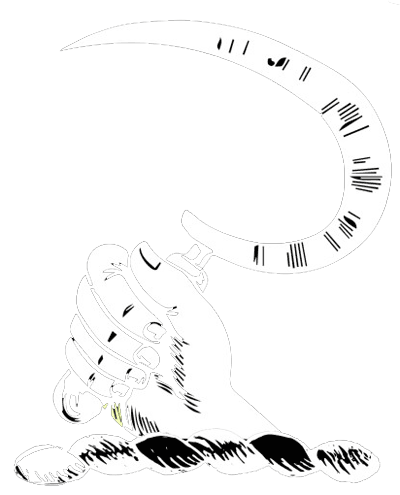
- The Sickle
- The motto: Hinc Garbe Nostra, or Hinc Garbe Nostrae
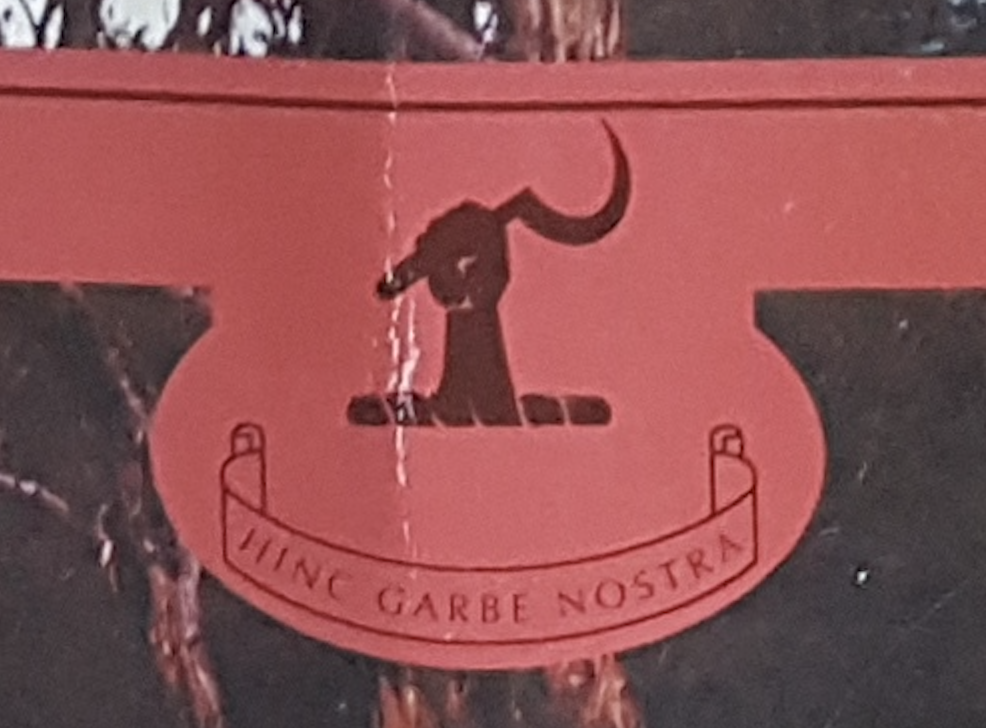
'Hinc Garbe Nostra' translates from Latin as:
Hinc meaning 'from here' or 'hence'
Garbe meaning 'sheaf' as in wheat/oat sheaf (heraldically this symbolises abundance, harvest, and wealth)
Nostra(e) meaning 'our' or 'ours'
When combined into the sentence "Hinc garbe nostrae", the translation becomes something akin to 'From here comes our sheafs', or 'from here comes our abundance/wealth'.
Further Reading
For further reading into heraldry and a more complete understanding I recommend the 1909 works of Arthur Charles Fox-Davies of Lincoln's Inn, Barrister-at-law, and Graham Johnston, Herald painter to the Lyon Court, titled A Complete Guide to Heraldry. It can be found freely available online, thanks to Project Gutenberg.
Alternatively, for a more authentic, page turning experience (and occasional stain): A Complete Guide to Heraldry can also be found freely available at the Internet Archive, thanks to the University of California Libraries.
The Project Gutenberg version has had a few typographical errors corrected and listed at the end of the text, and has been given a navigable index. It is a derivative work of the Internet Archive copy.The Internet Archive version is a fac similie of the book itself.